Thursday, 14 April 2016

Simpatico

About a year ago, a friend recommended I meet another educator knowing that we're both passionate about coaching and professional learning. I’m sure you’ve all met someone where the professional connection is instantaneous. When you chat, time flies and so do the ideas. As we are now co-presenting at EducationNation, we decided to meet during the holidays to plan. This is my attempt to describe our planning session because when I later reflected on our meeting, I wanted to learn and understand why it worked so well.

Flow chart by Mihaly Csikszentmihalyi


I’ve previously written a blog post about the Complexities of Collaboration. Yesterday, when we were collaborating, we were in the zone. One idea would be shared and then the other would take that idea further. We kept connecting concepts, beliefs, behaviours and madly drew visuals. Absorbed and enjoying the process, it was a partnership in productivity. Energised and totally involved, I suppose it’s what Mihály Csíkszentmihályi calls the flow. The moments when you are so engaged, you lose track of time and/or don’t think of checking your phone. Accompanying or complementing this flow was a spirit of authenticity. Building on each other’s ideas, our thinking was aligned yet progressive. We were disciplined and interdependent and collectively, we found our flow.

I would love to hear about your collaborative experiences.

Always curious,
Andrea

@stringer_andrea

Wednesday, 6 April 2016

Time for this moderator to move on...

I’ve been moderating #satchatOC & #satchatOZ for 3 years and in that time, I’ve met some outstanding educators, both virtually and in reality. I have never received any payment of money, free conferences, or anything of that nature. My purpose on #satchatOZ has never been about getting known, generating more followers, or receiving endorsements or sponsorships. It’s been about the LEARNING! Providing free professional learning that will hopefully benefit all students, while supporting teachers. I won’t deny it has enabled me to connect with educators who I thought were way out of my league. But that’s the great thing about Twitter; it levels the playing field. We can converse with those who are more experienced and while some may call them edu-rockstars, I call them well-known or more experienced. However, I also approached educators who I thought were up and coming or others requested. I invited those I believed would inspire or even challenge others beliefs and ideas.

So what did I receive from searching, preparing and moderating #satchatOZ for the last 3 years? The payoff is simple. I got to collaborate (most times) with some of the best educators in their field. I didn’t realise how much I enjoy collaborating and discussing topics until once it wasn’t possible. I am not sure people realise how much time and effort goes into #satchatOZ.


The #satchatOZ goal was to spark an interest, an idea, introduce new strategies, resources, or even challenge one’s thinking. It's intrinsically rewarding but lately, I have been wondering if it’s time for me to move on or pass the baton. I'm sure there’s someone else who can provide new ideas and energy to #satchatOZ. 

I am so very grateful to Brad, Billy & Scott who randomly invited me into the team. I’ve also appreciated my co-moderators-Holly, Jason, Andy and Tina for all the effort and time they’ve provided. Thank you to all those generous guests who have given their time and knowledge. I am lucky to call many of these guests, my friends. #satchatOZ is not a chat without its participants/educators.

I want to thank all of those who have tweeted, lurked, challenged my thinking or read the Storify. You have definitely made me think more, learn more and reflect more and for this,

 I THANK YOU!

The learning continues... @stringer_andrea

Friday, 26 February 2016

It's Personal

Technology is an effective tool for communication. This week I shared my learning of Twitter, blogging, TeachMeets and Voxer and how I utilise these platforms to connect with educators. Being connected has many advantages but as a coach, I believe a more authentic trusting relationship is established by connecting on a personal basis.

Emails have so many benefits as you can quickly respond, provide information or seek clarification. A wise women shared that if your email requires more than two small paragraphs, then maybe you should speak in-person with the recipient. If your email consists of a comment, issue or argument that is complex, it may be wise to initiate a conversation either by phone or in person.

I believe corresponding through emails can, at times, slow or even hinder the building of a trusting relationship. We all hear education is built on relationships and how trust is so important. I suppose it comes down to efficiency versus effectiveness. Next time I commence writing an email, I am going to ask myself-could I pick up the phone, walk down the hall, or make the effort to have a personal conversation? If education is built on relationships and trust, shouldn't I respect and value these relationships and make that extra effort?
http://gutsisthekey.com/2014/06/30/increasing-your-appeal/


The questions continue...
@stringer_andrea

Saturday, 13 February 2016

An Adaptable Path

I’ve commenced a new role this year as a Professional Learning Coach and started on my PhD path. I believe in mentoring new teachers and coaching experienced teachers, although I’m beginning to question this more. I’ve experienced being mentored as a beginning teacher in California, which is why I’m so passionate about mentoring. Yesterday, I spoke with my 'assigned' BTSA mentor. Coincidentally, my second mentor (personally chosen) emailed yesterday and although we only speak every 3-6 months, he is always supportive and generous with his time and knowledge. He is a STAR mentor in Seattle Public Schools. Both these relationships demonstrate that once a relationship is established and based on trust, it can endure time and distance and can adapt to suit new goals. I’ve been reading many books and articles about coaching and mentoring and it’s confronting at times for I’ve realised the more I learn, the less I know. A conversation with another coach made me realise that it’s ok to not have all answers. If we did, then where is the learning, the experience, the growth?

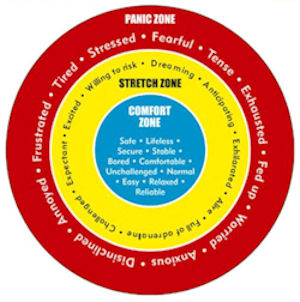
To be honest, I’ve been struggling with this. I’ve also inquired and learnt about the experiences of others at various schools and I was wondering which path to follow-cognitive coaching, instructional coaching, growth coaching etc. During the week I phoned an amazing educator I met at Harvard. It was a 15-minute call, but within those 15 minutes she provided the reassurance and direction I truly needed. Being out of your comfort zone is good but at times, you need support and encouragement. This is coaching! I was being coached as a PhD student. With established trust and good questioning skills, a coach can support you to leap into the stretch zone or retrieve you from the panic zone.

It’s not innovative to follow another’s path but one needs to learn from others and their experiences. How do I create an adaptable path that incorporates all teachers' professional learning needs, while aligning with my beliefs about professional development.

Professional development should be individualised, empowering & sustainable.


Friday, 15 January 2016

Inspired by Words, Inspired by Actions

2016 has begun and already I’ve been kindly invited to present, attend or help organise conferences. A conference is a meeting of people who 'confer' about a topic. I’ve been thinking…What do educators need or want from a conference? By conference, I mean both profit & non-profit. 

* One of my favourite ‘paid ‘conferences I attended last year was the ACEL conference.  http://andreastringer.blogspot.com.au/2015/10/can-you-measure-effectiveness-of.html

* One of my favourite ‘free’ conferences I attended was #TMHouse  https://storify.com/stringer_andrea/tmhouse-november-2015

Inspired by Words
I loved listening to stories shared by Cathy Freeman and Mark Donaldson and the experiences and research presented by the educational keynote speakers was outstanding. I believe keynote speakers can inspire you with their words. They share the latest research or ask questions to clarify or challenge your thinking. They may propose a new approach or idea. It’s up to YOU to follow through with action. Like Twitter, conferences are springboards for you to dive deeper into the topic or connect with the presenter. I do struggle with the ‘sit and listen’ approach and wonder if they could provide time and activities that promote discussion and collaboration with others directly after each presentation. This way you are more likely to transfer words into actions.

Inspired by Actions

A TeachMeet is an organised but informal meeting (in the style of an unconference) for teachers to share good practice, practical innovations and personal insights in teaching with technology. The TeachMeet at Sydney Opera House was inspiring as we listened and viewed effective practises (actions) and stories of learning, experiences and failures. What was different during this TeachMeet was the opportunity to chat. Half way through the presentations, teachers had the opportunity to further speak with the presenters or converse with other educators about what they just heard & viewed. You are provided an opportunity to transfer the actions into words.

I encourage students to ‘turn and talk’ with their peers during my classes, especially when new concepts or skills are introduced. What if conferences encouraged more turn and talk to deepen the level of understanding? Does attending a conference guarantee professional learning? Who is responsible for your PD? What would be your ultimate conference experience?

Providing opportunities to have discussions after presentations enables different perspectives and experiences to be shared and promotes a deeper understanding. 


The learning continues....
@stringer_andrea